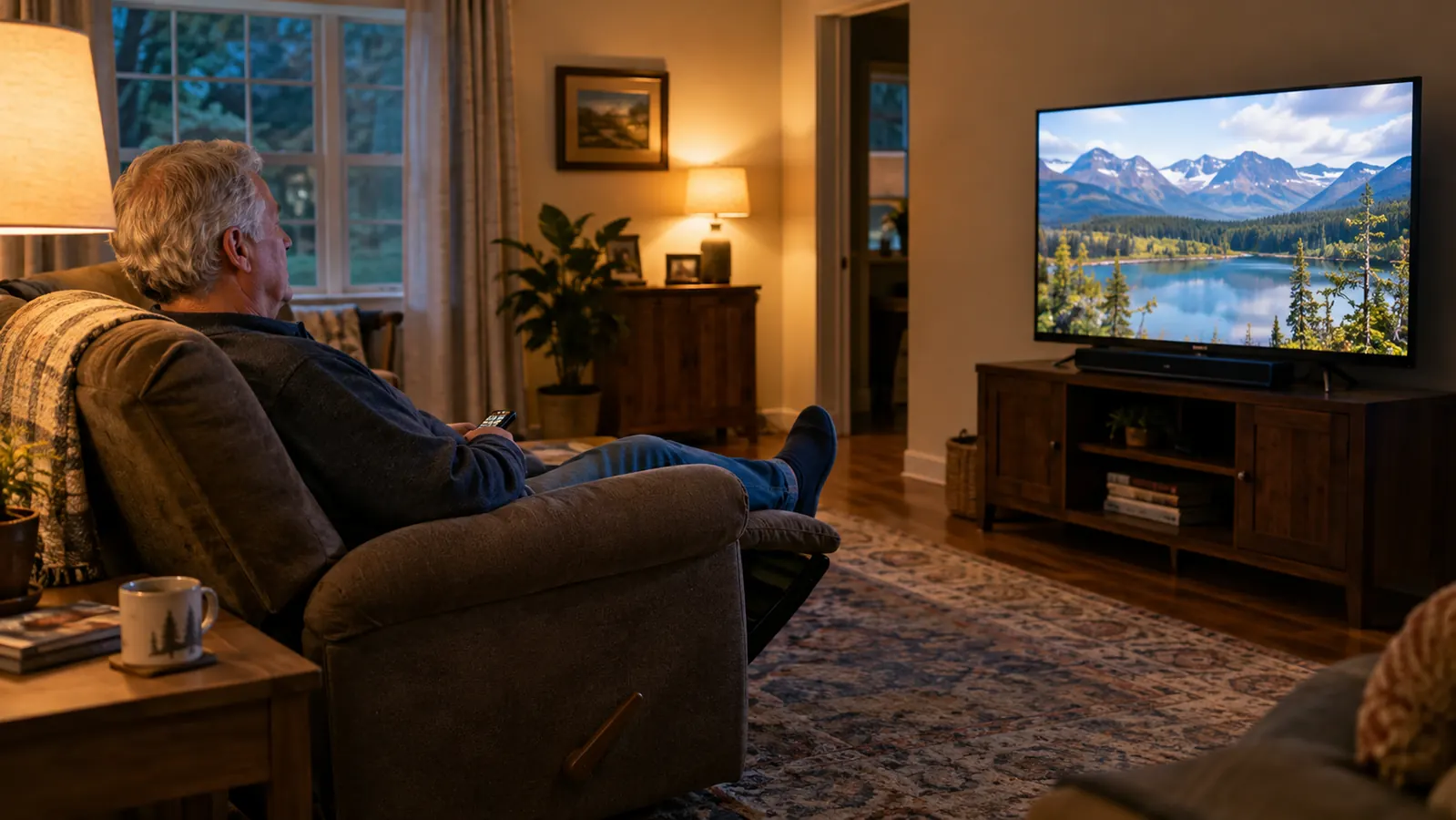
If you are reading this, you already know the feeling. You are settled into your recliner, about twelve feet from the screen, and the six o'clock news comes on. The anchor is talking, but every other sentence sounds like he is speaking with a hand over his mouth. You reach for the remote and nudge the volume up. Then the weather chime comes through loud enough to rattle the pictures on the wall, and Joanne looks over and says the volume is fine. You know it is not fine, but you cannot prove it, so you let it go and miss half of the next story. The TV is a 55-inch set that Joanne and I bought three years ago, and its built-in speakers are fine for her and useless for me. I have mild to moderate high-frequency hearing loss in both ears, worse on the left, from 34 years as a lineman around line equipment and chainsaws. Dialogue is what I lose first. Music is less of a problem. So when I set out to compare the ZVOX AV100 and the Bose TV Speaker, I was not testing for audiophile sound quality. I was testing one thing: could I follow a conversation on screen without reaching for the remote every five minutes? I ordered both soundbars, ran them for three weeks on the same TV in my living room, and kept notes on what each one did for the voices I was missing.
The short answer is that the ZVOX AV100 is the better buy if your only goal is hearing voices clearly. Its AccuVoice system has six levels of voice boost, and a single button on the front of the soundbar cycles through them. The Bose TV Speaker sounds richer for music and carries a bigger name, but its dialogue mode is a single on-or-off switch, and on my 55-inch TV it simply did not lift voices the way the ZVOX did. I ran both soundbars for three weeks, switching them out on the same TV, watching the same broadcasts, sitting in the same chair, and I kept the ZVOX. I set both soundbars to their default modes first, then tried every dialogue setting each one offered, and I logged what I could hear on the same newscast, the same western, and the same baseball game. Here is the full breakdown, including where Bose genuinely wins, because it does win some things. If you mostly watch music programs and your hearing loss is mild, read the Bose section before you decide.
| ZVOX AV100 | Bose TV Speaker | |
|---|---|---|
| Dialogue clarity | AccuVoice with 6 levels of voice boost, tuned specifically for speech frequencies | Single dialogue mode toggle, mild effect on difficult audio |
| Setup | One optical cable to the TV, no app, no pairing, works with any remote | One cable to the TV, no app, but needs the Bose remote or app for dialogue mode |
| Sound for music | Clear and honest, but built for speech first | Warmer, fuller stereo sound that flatters music and movies |
| Size on the stand | 15 inches wide, about 3 inches tall, fits under most TVs | 23 inches wide, still compact but needs more shelf space |
| Wall mounting | Keyhole slots on the back, works with a standard soundbar bracket | Keyhole slots on the back, works with a standard soundbar bracket |
| Best for | Adults 55+ who lose TV dialogue and want one button that fixes it | People who want a compact all-rounder and listen to music through the TV |
Where ZVOX Wins
The ZVOX AV100 wins the only test that matters for this site: whether you can follow a conversation on screen without straining. The AccuVoice system is not a gimmick. It is a dedicated speech-enhancement circuit with six levels of voice boost, controlled from the front of the soundbar or the included remote. The first night I hooked it up, I left it on level two and the evening news became intelligible to me again. Not perfect, but intelligible. On level four, the quiet dialogue in a western with heavy background music came through clearly enough that I did not have to ask Joanne what was said. That had not happened in years. The western was an old John Wayne picture with a score that swelled under every line of dialogue, the kind of audio that used to make me give up and turn on the closed captions. The test that convinced me was a Sunday night baseball game. The announcers were talking over crowd noise, and I followed every pitch for three innings without touching the remote. Joanne, who has normal hearing, noticed the difference immediately. During the three weeks the ZVOX was hooked up, she never once asked me to turn the TV down. I cannot tell you the last time that was true.
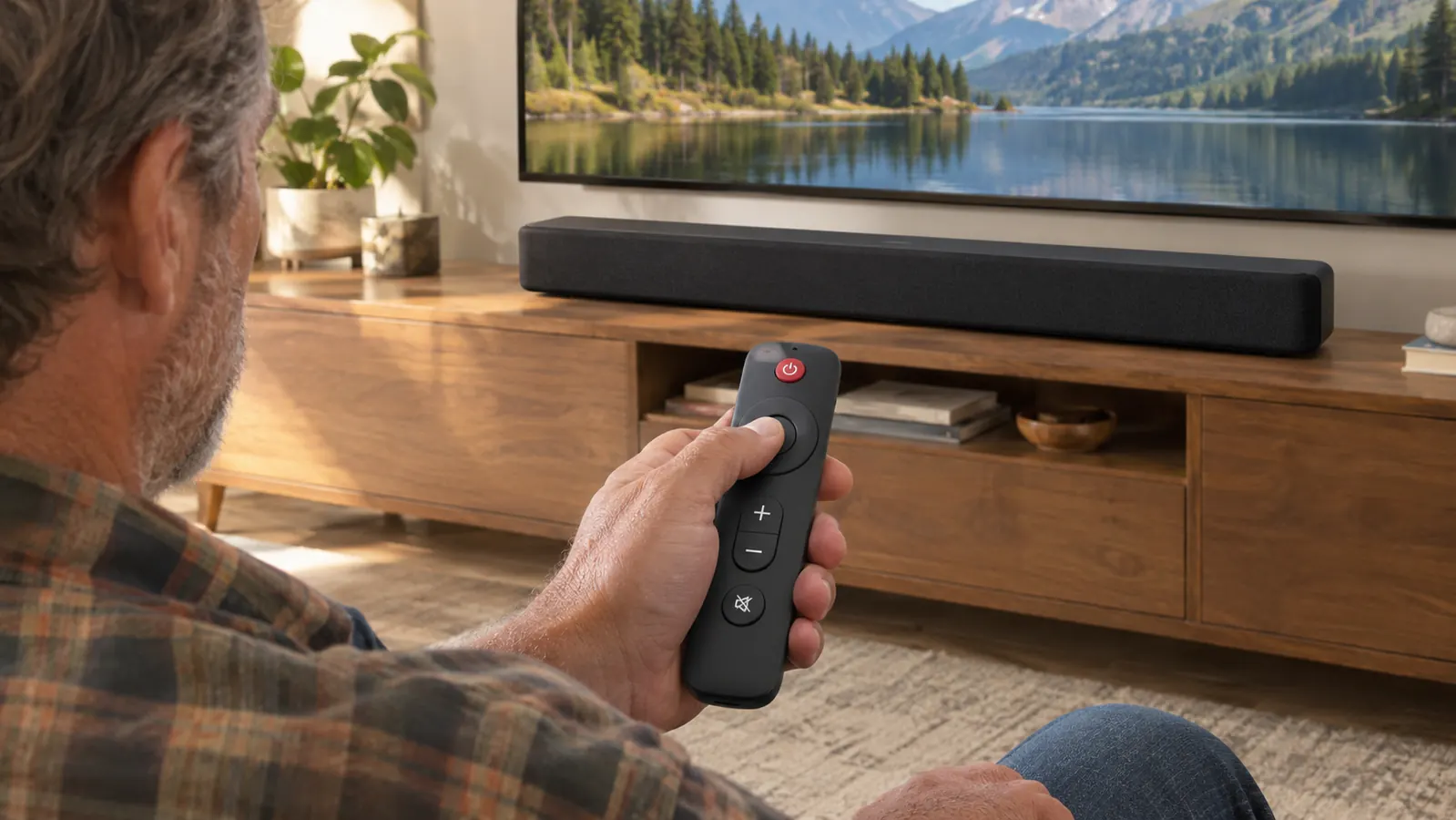
The ZVOX also wins on simplicity, which matters more as you get older. There is no app to install, no Bluetooth pairing dance, no sound modes buried in a menu. You connect one optical cable from the TV to the soundbar, turn it on, and it automatically takes over the TV speakers. The soundbar is 15 inches wide and about 3 inches tall, so it fit on my media stand under the 55-inch TV without blocking the screen. The included remote has large buttons, and it can learn your TV remote's volume commands, so you do not need a second remote on the coffee table. I spent 34 years as a lineman and I like my tools to be straightforward. The ZVOX is the most straightforward piece of electronics I have owned in a decade. I did not read the manual. I did not need to. I plugged it in, turned it on, pressed the AccuVoice button twice, and that was the whole installation. Before this test, I had tried the TV's built-in speech mode, which helped a little, and a cheap soundbar from a big box store, which made everything louder without making anything clearer. The ZVOX was the first thing that actually fixed the problem.
I found my setting on level three after about a week of experimenting. Level one was a small improvement. Level two was where the news became comfortable. Level three handled the harder material like westerns and baseball. Levels five and six are there for people with more loss than mine, and it is good to know they exist even if I do not need them. The point is that the adjustment is yours to make. You are not stuck with one generic setting that tries to work for everyone. You can change it from your chair with the remote, and you can change it back just as easily.
Where Bose Wins
I will give the Bose TV Speaker its due, because it is a genuinely good piece of equipment. It is a wider bar, 23 inches across, and it makes music and movie soundtracks more enjoyable. When I played classic country through the TV's music app, the Bose had a warmth and a stereo spread that the ZVOX could not match. The ZVOX is honest and clear, but it is built for speech first. The Bose is built to sound good with everything. It also looks like a premium product on the stand, with a fabric grille and a solid feel. If you watch a lot of concerts or musicals and your hearing loss is mild, the Bose is the more pleasant all-around speaker. I would not argue with anyone who chose it for that reason. On a Sunday afternoon baseball broadcast, the crowd noise and the crack of the bat sounded fuller through the Bose, and the music between innings was genuinely enjoyable. I played the same three songs on both bars, back to back, and there was no contest on that score.
But here is what nobody tells you about the Bose dialogue mode: it is a single toggle. You turn it on or off, and that is the whole adjustment. There is no level two, no level four, no way to find the setting that matches your particular loss. On my TV, with the same news broadcast and the same western, the Bose dialogue mode helped maybe a third as much as the ZVOX on its middle setting. For someone with mild high-frequency loss like mine, that was not enough to stop me from reaching for the remote. There is also the matter of the remote. The Bose needs its own remote or the app to reach the dialogue setting. My TV remote could not do it. That is an extra remote on the coffee table and an extra layer of fiddling. I am 69 years old. I do not want a second remote, and I do not want an app for my soundbar. I tested this on a Tuesday night during the news, switching back and forth between the two bars on the same broadcast. The difference was not subtle. With the Bose, I leaned forward in my chair. With the ZVOX, I sat back. The Bose remote is a nice piece of hardware, but it is one more thing to lose between the couch cushions.
The Bose sounded richer with music. The ZVOX made the evening news sound like someone was finally speaking clearly. I watch the news every night, so I kept the ZVOX.
The 15-minute fix for mumbling TV dialogue
One cable, one button, six levels of voice boost. If you keep reaching for the remote during the news, this is the soundbar I would start with.
Amazon Check Today's Price on Amazon →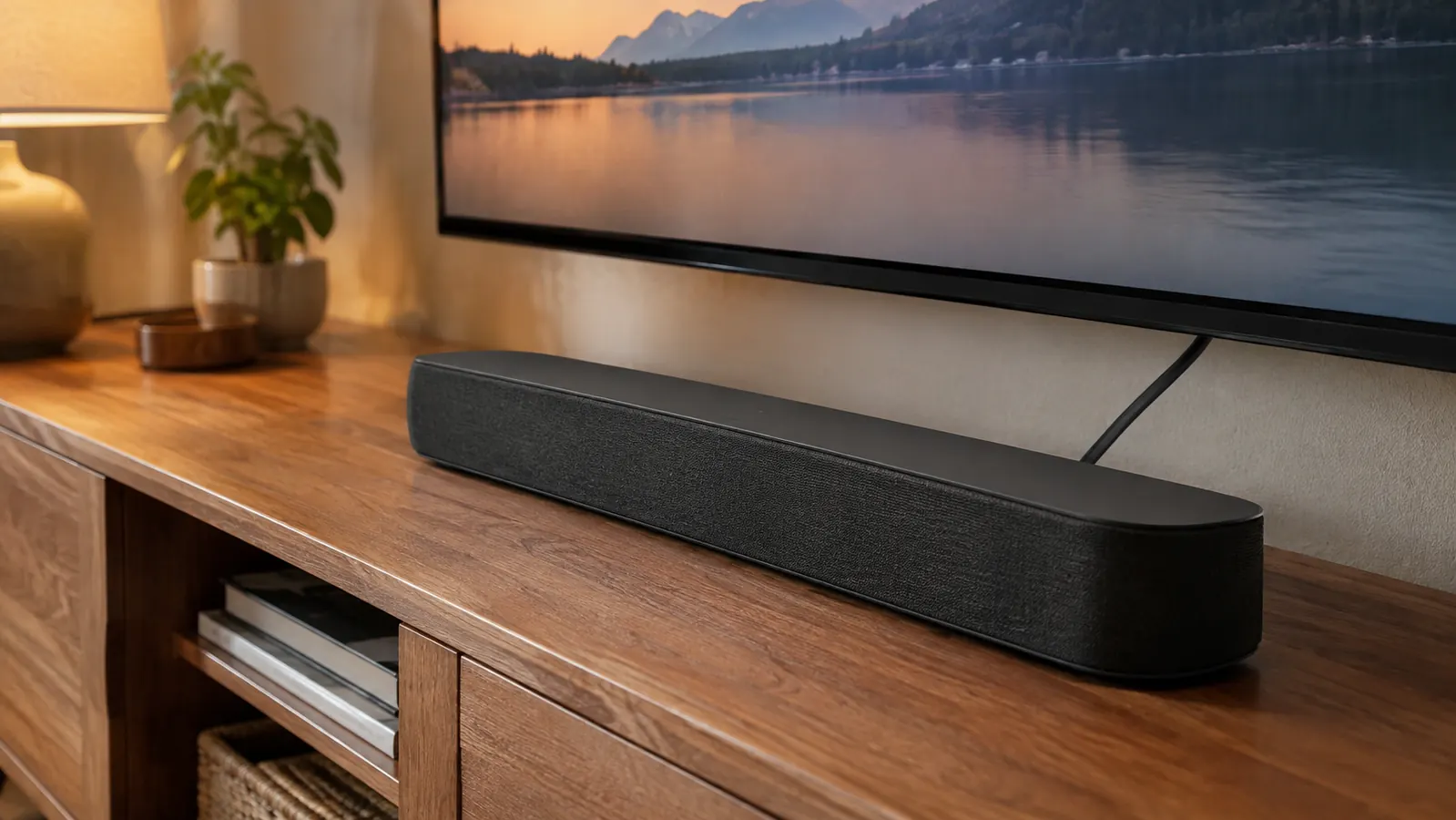
Who Should Buy Which
Buy the ZVOX AV100 if you have mild to moderate hearing loss and your main complaint is that TV voices sound muffled. That includes you if you find yourself turning the volume up for dialogue and then down for everything else, or if your spouse keeps saying the TV is loud enough when it clearly is not. The six AccuVoice levels give you room to find your own setting, and the simple controls mean you will actually use it. It is also the better choice if you want one remote, not two. In my living room, the ZVOX took the TV volume from a point where I was constantly adjusting it to a point where I set it once and left it alone. That is the whole ballgame for this product. If you have already had a hearing test and you know you lose high frequencies, the ZVOX is the safer bet. If you have not had a test, start there, because the right setting on the ZVOX depends on what your ears actually need. And if you watch a lot of westerns and baseball like I do, where the dialogue sits right on top of background noise, the ZVOX gives you the headroom to dig voices out of that mix.
Buy the Bose TV Speaker if you want a compact all-round soundbar that makes music and movies sound great and you only need a small nudge on dialogue. It is a fine speaker, and for someone with normal hearing who just wants better TV sound, it might be the better all-around product. But if your ears are anything like mine, the dialogue boost will leave you wanting more. I encourage anyone reading this to get a proper hearing test with a professional before you spend money on any TV listening aid, because knowing your actual loss pattern makes the choice much easier. I am a user, not an audiologist. I say that as a man who wishes he had gotten tested ten years earlier, before I spent years fighting with volume controls and pretending I could hear fine. A ten-minute test at an audiology office told me more about my own ears than twenty years of guessing, and it made every listening decision since then simpler. The Bose is not a bad product. It is a good product aimed at a different problem.
Still deciding? Start with the one that fixes the actual problem.
The ZVOX AV100 is built for one thing: making voices clear. If muffled dialogue is why you are shopping, this is the soundbar I would put under the TV first.
Amazon Check Today's Price on Amazon →