
The first thing I lost wasn't the television. It was Joanne's voice when she was in the kitchen and I was in the living room. She'd say something, I'd nod, and then I'd have to ask her to say it again. That's the part of getting older nobody warns you about. It's not that sounds go away. It's that the ones you need most, the soft voices and the ends of sentences, are the first to go.
I'm Walt Kesler, 69, retired electrical lineman from outside Chattanooga, Tennessee. I've got mild to moderate high-frequency hearing loss in both ears, worse on the left, from decades around line equipment and chainsaws. I'm not an audiologist, and this isn't medical advice. But after carrying the Williams Sound Pocketalker Ultra for a good while now, I can tell you exactly where it helps and where it doesn't. Here are ten reasons it earns its place in my shirt pocket.
Hear the soft voices again
The Williams Sound Pocketalker Ultra puts the microphone close to the person talking and the sound in your ear. It's the tool I reach for every day. Check today's price on Amazon and see if it helps your living room the way it helped mine.
Amazon Check Today's Price on Amazon →It puts the microphone where the sound actually is
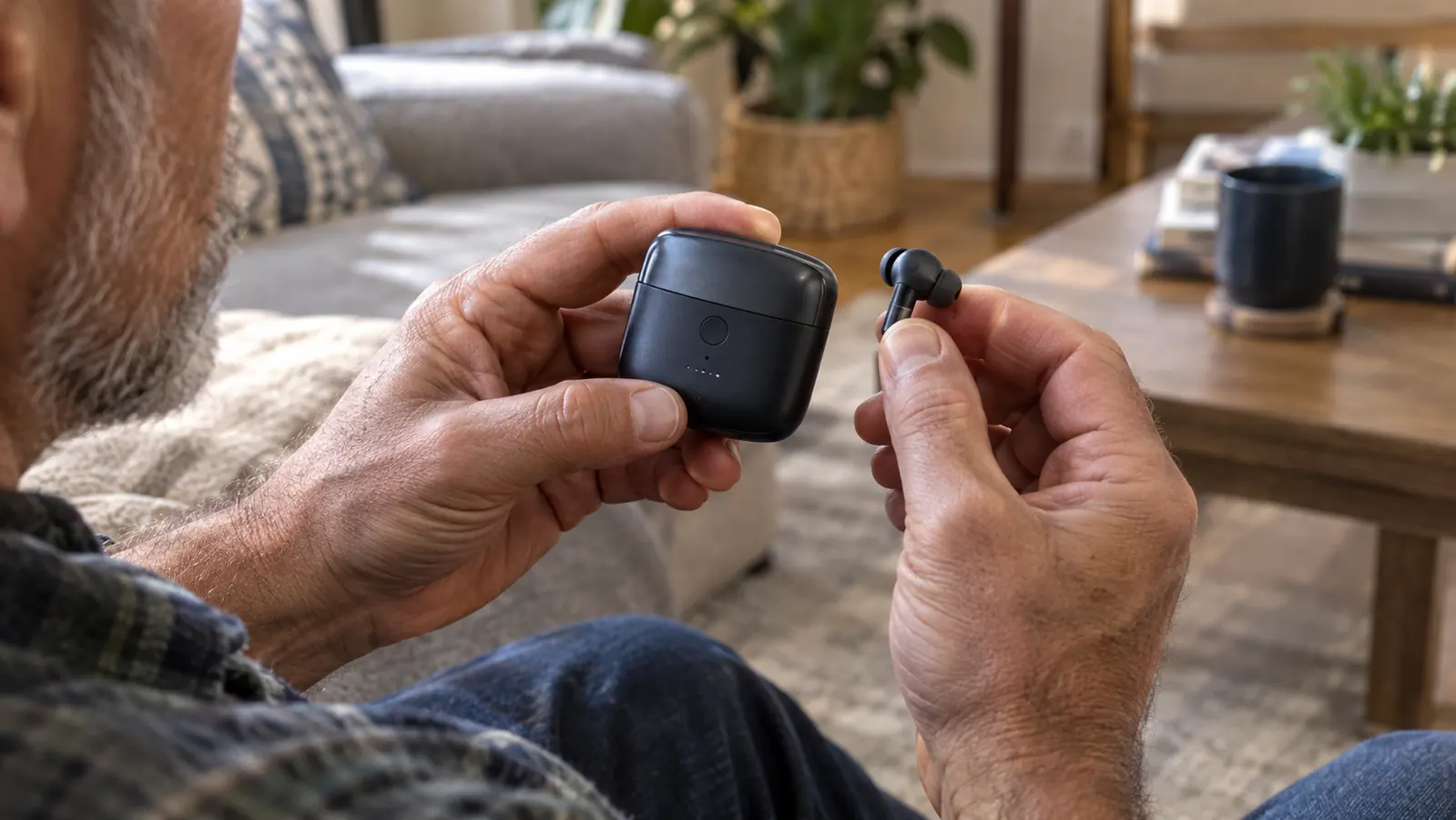
My problem was never that the world got quiet. It's that voices get thin by the time they cross a room. The Williams Sound Pocketalker Ultra fixes that the simple way: the microphone goes near the person talking, and the sound comes straight into the earbud. Joanne clips the mic to her collar when we're in the kitchen, or sets it on the table at a restaurant. The voice doesn't have to survive the trip across the room anymore. That one change made more difference than anything else I tried.
Soft voices come back without turning the whole room up
With my kind of loss, the low part of a voice comes through fine. It's the consonants, the ends of words, the soft parts, that vanish. A plain volume boost doesn't help, because it boosts everything at once. The Pocketalker brings up the quiet speech, and the headphones keep it private. The quiet parts of a voice carry the meaning, and those are exactly the parts I was missing. I can hear Joanne talk in a normal voice instead of asking her to speak up, which she hates doing anyway.
It saves the passenger seat conversation
The car was the first place it really hit me. Road noise, the radio, the air conditioner, and my wife's voice all arriving at once. I'd catch half of what she said and pretend I caught the rest. With the Pocketalker, she clips the mic to the sun visor, and I hear her over the road noise. We've had more actual conversation on the way to town in the last month than we did in the six months before. It's not a substitute for getting my ears checked, but it made the drive to town something I look forward to again.
Restaurants stop being a guessing game
A busy restaurant is the hardest room there is for high-frequency loss. Every plate and every conversation lands right on top of the one you're trying to follow. The Pocketalker's microphone points at the person across the table, which helps more than I expected. It's not perfect, and I won't pretend it is. But I've stopped nodding along to conversations I couldn't actually hear. I can follow the conversation now, and that makes the whole evening easier.
It earns its keep at the doctor's office
The exam room is where I need to hear the most and understand the least. The doctor talks fast, faces the chart, and uses words I have to ask him to spell. Now I hand him the microphone or set it on the counter, and the earbud goes in my good ear. I've walked out of the last two appointments actually knowing what I was supposed to do next. The nurse even noticed I wasn't leaning in like I used to. That alone was worth it.

It gives Joanne her voice back
This is the reason she's the one who pushed me to keep it. For years she'd say something, I'd miss it, and she'd have to repeat it. Then she'd repeat it again, louder, and we'd both get frustrated. With the Pocketalker, she talks once. The first time it happened, she stopped and stared at me. She didn't have to say anything. We both knew what changed. That's the kind of change you can't put a number on.
The controls are made for hands that have worked for a living
After 34 years on the line, my fingers aren't as nimble as they used to be. Tiny buttons and touch screens are my enemy. The Pocketalker has a big volume wheel and a simple switch. I can work it without reading glasses and without looking. That sounds like a small thing, but a device you can't operate easily is a device you stop using.
It lives in a shirt pocket, so it's there when you need it
The whole thing is small enough to ride in my shirt pocket next to my reading glasses. That matters because hearing trouble never waits for a convenient time. The doorbell, the phone, the man at the feed store, it all happens when it happens. Knowing I have it with me means I stop dreading the moments I used to avoid. My shirt pocket has become its permanent parking spot, and I don't leave the house without it.
You hear it, the room doesn't
The earbud keeps the sound between me and the person I'm listening to. Joanne can sit right next to me and not hear a thing through the bud. That means I can use it at the pharmacy counter or the county office, anywhere I don't want to broadcast my business to everyone in line. That matters more than you'd think when you're standing in line at the pharmacy. It's a private conversation, not a public event.
It's honest about what it is
Here's the part nobody in the ads will say: a personal sound amplifier is not a hearing aid, and it won't fix severe loss. What it does is take the edge off the everyday conversations that were slipping away. I still get my hearing checked, and if a professional ever tells me I need real hearing aids, I'll listen. Until then, the Williams Sound Pocketalker Ultra is the tool I reach for. It does one job, and it does it well.
What I'd Skip
I'll be straight with you, the way I'd be straight with a neighbor. If you've never had a hearing test, start there, not here. An amplifier can't tell you what's actually wrong, and if your loss is severe, you need a professional and probably hearing aids, not a personal amplifier. Skip it, too, if you mainly want help with the television all day. A dedicated TV listening system might serve you better. And if you're hoping it will quiet the ringing in your ears, it won't. It's a tool for conversation, and it's a good one. But it's not a cure, and I'd rather you hear that from me than find out after you've bought one.
The first time I used it, Joanne said something from the kitchen and I answered her without asking her to repeat it. She stopped mid-step and just looked at me.
One conversation is all it takes
If you're tired of asking people to repeat themselves, the Williams Sound Pocketalker Ultra is worth a look. Check today's price on Amazon.
Amazon Check Today's Price on Amazon →