
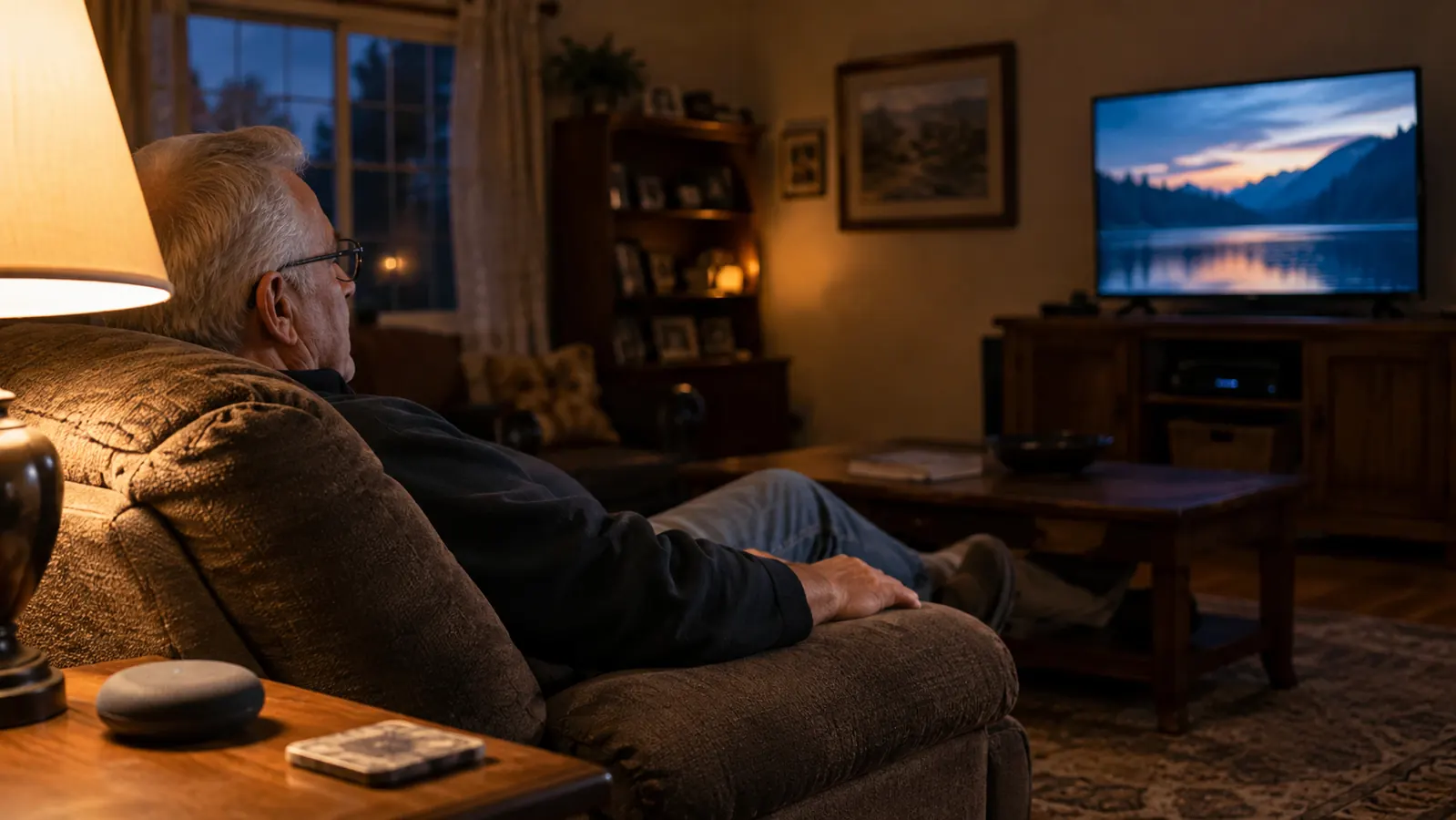
The first sign of my hearing trouble wasn't a ringing or a whistle. It was Joanne saying, 'Walt, that TV is loud enough for the neighbors,' from the kitchen, and me realizing I'd been nudging the volume up one notch at a time for a year. The dialogue on the evening news had gone muddy, and the quiet parts of westerns might as well have been in another language. I tried the usual fixes first. Sitting closer to the screen. Turning it up until the windows rattled. Cupping a hand behind my left ear. None of it worked, because the problem wasn't the TV. It was that soft voices and high notes just don't land the way they used to. That's why I ended up with a Williams Sound Pocketalker Ultra, and why I've used it nearly every day for six months.
Before I go any further, I should say what I am and what I'm not. I'm a retired electrical lineman, not an audiologist. I spent 34 years around line equipment and chainsaws, and I have mild to moderate high-frequency hearing loss in both ears, worse on the left. What I can tell you is how this thing behaves in a real living room, a real restaurant, and a real car. If you're wondering whether it would help you, that's the information you actually need.
The Quick Verdict
The Pocketalker Ultra does one job well: it brings voices closer without turning the whole house into a movie theater. It won't fix your hearing, but it will get you through the evening news and a quiet dinner out.
Amazon Check Today's Price →Want to hear the dialogue without the whole room hearing it?
After six months of daily use, the Pocketalker Ultra is still the first thing I reach for at 6:30. It's simple enough for a man who never read the manual.
Amazon Check Today's Price on Amazon →How I've Used It
I've had the Pocketalker Ultra since late last summer, and it has a permanent spot on the end table next to my recliner. Our living room hasn't changed in years: a 55-inch TV against the wall, my recliner about 12 feet from the screen, and Joanne's chair off to the side. I run the earbud in my left ear, the one that gives out first on dialogue, and set the unit on the table beside me. The microphone faces the TV. That's the whole installation.
Most nights I use it for the 6:30 news, then a western or a ballgame. Joanne watches at a normal volume now, which was the whole point. Before, I'd have the TV loud enough that she'd take her book into the kitchen. Now she sits in her chair and I sit in mine, and neither of us is shouting. On weekends I take it out with me, in a shirt pocket, for the fellowship hall after church and the booth at our usual diner.
I also use it at the pharmacy counter and the doctor's office, places where a receptionist behind a window is going to speak softly and fast. Last month at the clinic, the nurse gave me my appointment time twice before I caught it. With the Pocketalker in my shirt pocket, I'd have heard it the first time. It doesn't make every word perfect, but it cuts the number of 'I'm sorry, what?' moments in half, which is a bigger quality-of-life change than it sounds. I've started grabbing it on the way out the door the way I grab my keys.
What the Pocketalker Ultra Actually Does
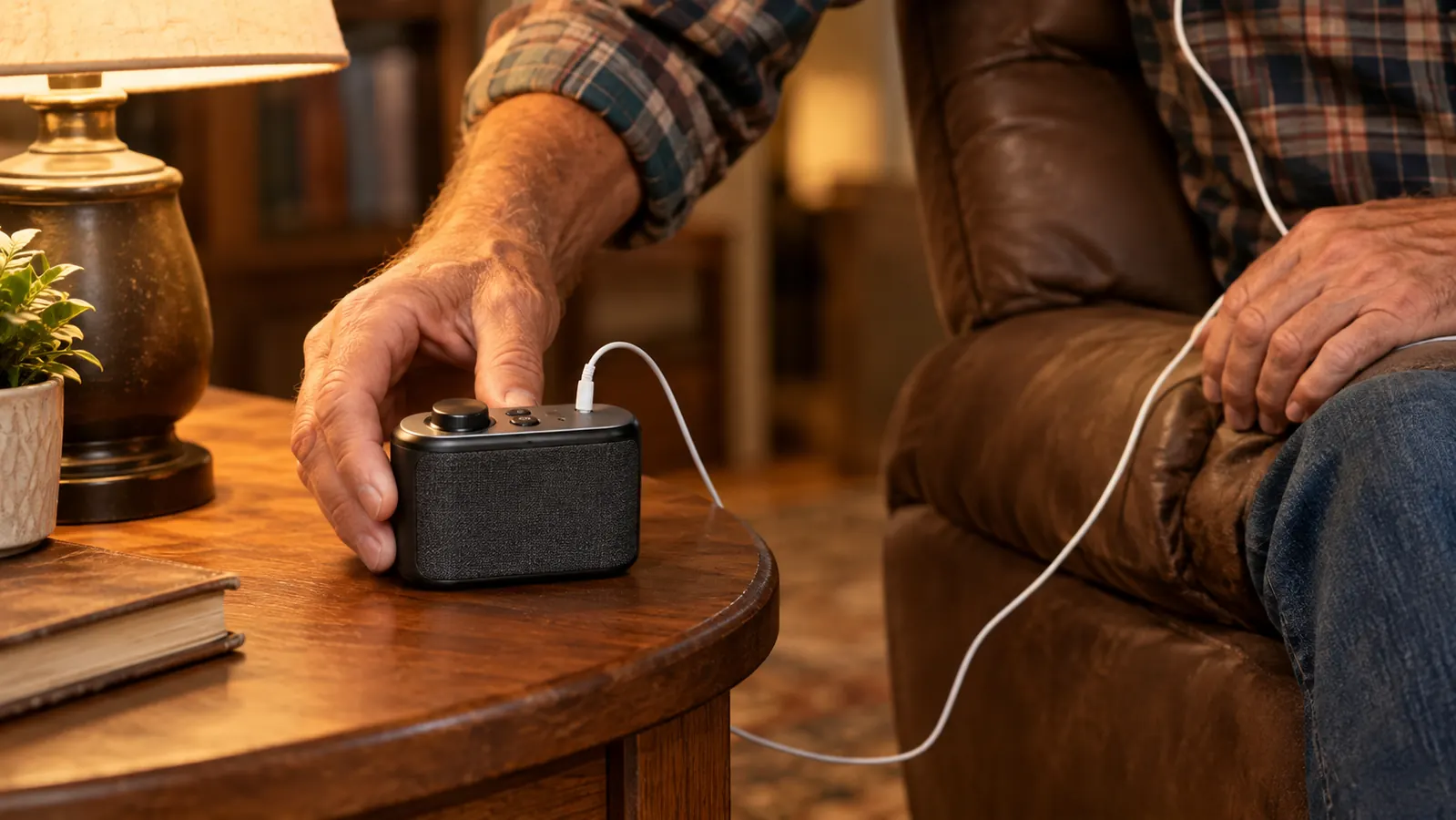
The Pocketalker Ultra is a personal sound amplifier, not a hearing aid. The difference matters. A hearing aid is fitted to your specific loss by a professional. This is a general-purpose device with a microphone, an amplifier, a volume knob, and a tone switch, and it sends what it picks up into an earbud or a pair of headphones. You adjust it the way you'd adjust a radio.
The tone switch is the part people overlook. It has a couple of positions that shift the sound toward bass or treble. For someone like me, who loses high-frequency sounds first, boosting the treble brings consonants back. That's why dialogue, especially the soft-spoken parts, gets clearer instead of just louder. Louder alone doesn't help me. Clearer does.
It runs on two AAA batteries, and the kit came with a year's supply. Williams Sound has been building assistive listening gear for decades, and it shows in the details. With a few hours of use a day, I've been changing them about every six to eight weeks. The controls are simple enough that I never opened the manual, which is about the highest praise I give any gadget.
Six Months of Evenings in the Living Room
The real test of any TV listening aid is whether it survives everyday use, and this one has. The news is the hardest thing I watch, because anchors talk fast and the volume dips between segments. With the Pocketalker on the table and the tone switch up, I catch the names and the place names the first time. I don't have to ask Joanne what the weatherman just said about the weekend. One night in March, the weatherman ran through a freeze warning for the valley counties, and I caught every county name the first time. Before the Pocketalker, I'd have waited for the map to come back and read it off the screen myself.
Baseball is easier, and it's where the unit earns its keep in a different way. The announcers are steady and the crowd noise is background. The amplifier doesn't try to sort one from the other, so you get both, but at a level where the announcer is the thing you follow. Westerns, with their quiet dialogue and sudden gunfire, are the worst case. I turn the volume down for the loud parts and back up for the talky parts. That's a small chore, and it beats the alternative, which was rewinding everything twice.
Joanne's opinion matters here, because she's the one who used to leave the room. She says the TV is at a level she'd pick for herself now. That's the whole win. She didn't have to change her habits. I changed one small thing about mine.
The First Week: What to Expect
The first night, I made the mistake of turning the volume up too far. The Pocketalker is sensitive, and turned up too high it picked up the refrigerator hum from the kitchen. Back it off a few notches and the room goes quiet again. The lesson is to start low and work up until dialogue is clear, not until everything is loud. I had the gain at about three-quarters that first night, because that's where my radio habit told me to put it. The hum showed up in the quiet stretches between newscasts, and it took me two evenings to figure out the knob was the problem, not the unit. Now it sits at about a third of the dial and I don't touch it.
The second thing to expect is a settling-in period for your ear. An earbud in one ear while the other ear stays open takes a little getting used to. After a few evenings, my brain stopped noticing the difference and just started using the extra input. Now it feels normal, the way any new pair of glasses feels normal after a week.
One thing I'd tell anyone starting out: use it for the news first, not the ballgame. The news is steady and the voices are clear, so you can find the right volume without fighting crowd noise. Once you've got the setting, the rest is easy.

Out and About: Where It Helps and Where It Doesn't
I'll be honest about the limits, because this is where the amplifier gets oversold. In a quiet restaurant, sitting in a booth with the microphone on the table between us, it helps a lot. We go to the same diner most Saturday mornings, and the waitress knows to give us the corner booth. I set the unit on the napkin holder between us and leave it there through breakfast. My left ear picks up Joanne's voice and the waitress's voice the way my right ear already does. In a loud room, a crowded fellowship hall with plates clattering and everyone talking at once, it's a different story. The unit amplifies everything, not just the voice you want. Sometimes I turn it off in there and just let my good ear do the work.
The car is a good place for it. The engine and road noise are steady, and the person in the passenger seat is close. I keep the unit in my shirt pocket with the earbud in, and I can carry a conversation without taking my eyes off the road. That's been a pleasant surprise. The car is noisier than it was new, and Joanne doesn't have to raise her voice on the way to the grocery store anymore. The first time she noticed, she said, 'You answered me before I repeated myself.' That's the kind of small win that adds up.
The other thing I've learned is to manage expectations. This is a tool, not a cure. It gets me through situations I'd otherwise avoid, but it doesn't make me hear like I did at 40. If your hearing loss is past mild to moderate, or if you haven't had it checked, do that first. A professional can tell you whether an amplifier is enough or whether you need something fitted.
The Tradeoffs Nobody Mentions
The earbud is the first thing you'll notice. The one in the box is a standard fit, and it works, but if you have small ear canals it may not stay put. Mine worked loose in my left ear after about an hour, and a pair of foam tips I already had fixed it within a minute. The fit has been solid ever since, and I wish I'd made the swap on day one. If you'd rather not have anything in your ear, the unit also works with a set of lightweight headphones, which some people find more comfortable for a full ballgame.
It's not discreet, and you should know that going in. The unit is visible on the table, and people will ask about it. I've found that a one-line answer, 'it helps me hear in restaurants,' ends the conversation fast. Nobody has ever been rude about it, but if the idea of being asked bothers you, that's a real consideration.
It's also a single-listener device. It helps the person wearing the earbud, and nobody else. That's exactly what I wanted, but if you're picturing something that streams the TV to both of you, this isn't it. And because it picks up room sound, it works best when you point it at what you want to hear. It won't pull a voice out of the next room.
One more honest note. The tone switch is not a fine tuner. It has a few positions, not a dial, so you pick the closest setting and leave it. That's been enough for me, but if you're the kind of person who wants to dial in your exact prescription, this isn't that device. It's a hammer, not a scalpel, and it's priced like a hammer.
What I Liked
- Brings dialogue back at a volume the whole room can live with
- Tone switch boosts treble, which is where most age-related loss lives
- Simple controls, no app, no pairing, no learning curve
- Two AAA batteries last six to eight weeks with daily use
- Works with earbuds or headphones, so you can fit it to your comfort
- Built by Williams Sound, a company with decades in assistive listening
Where It Falls Short
- Not a hearing aid, and not a substitute for one
- Amplifies background noise right along with voices in loud rooms
- Earbud fit may not suit everyone out of the box
- Single-listener only, no TV streaming for the couple
- Visible on the table, so you'll answer a question now and then
The TV is at a volume Joanne would pick for herself now. That's the whole win, and it's why I still reach for it every night.
Who This Is For
If you're 55 or older, you've got mild to moderate loss, and the main casualty is dialogue, this is for you. It's for the person who turns the TV up until the spouse leaves the room. It's for the person who dreads the 'what?' at the restaurant. It's for the person who wants one simple tool that works tonight, without an appointment or a fitting. If that's you, the Williams Sound Pocketalker Ultra is worth a try.
Who Should Skip It
If your hearing loss is more than mild to moderate, or you haven't had it checked in years, skip the amplifier and see a professional first. An audiologist can tell you whether you need something fitted to your specific loss. Also skip it if you're looking for something discreet that disappears into your ear, or if you want to stream the TV through a receiver. This is a straightforward amplifier, and it works best in reasonably quiet places. In a loud room it will frustrate you, and you deserve to know that before you buy.
Here's my bottom line. The Pocketalker Ultra doesn't pretend to be something it isn't. It's a well-built amplifier that brings voices closer, and after six months of evenings and weekends, it's earned its spot on the end table. If your hearing loss is mild to moderate and dialogue is what you lose first, it's the cheapest quality-of-life fix I found. If your loss is worse than that, spend the money on a professional fitting instead. Either way, get your hearing checked. That's the advice I'd give anybody in my boat. And if you do buy one, give it a full week before you decide. The first night won't tell you the truth.
Six months in, it's still on the end table every night.
The Pocketalker Ultra brought the volume back down to normal in our house. If that's the trade you're after, today's price on Amazon is worth a look.
Amazon Check Today's Price on Amazon →