
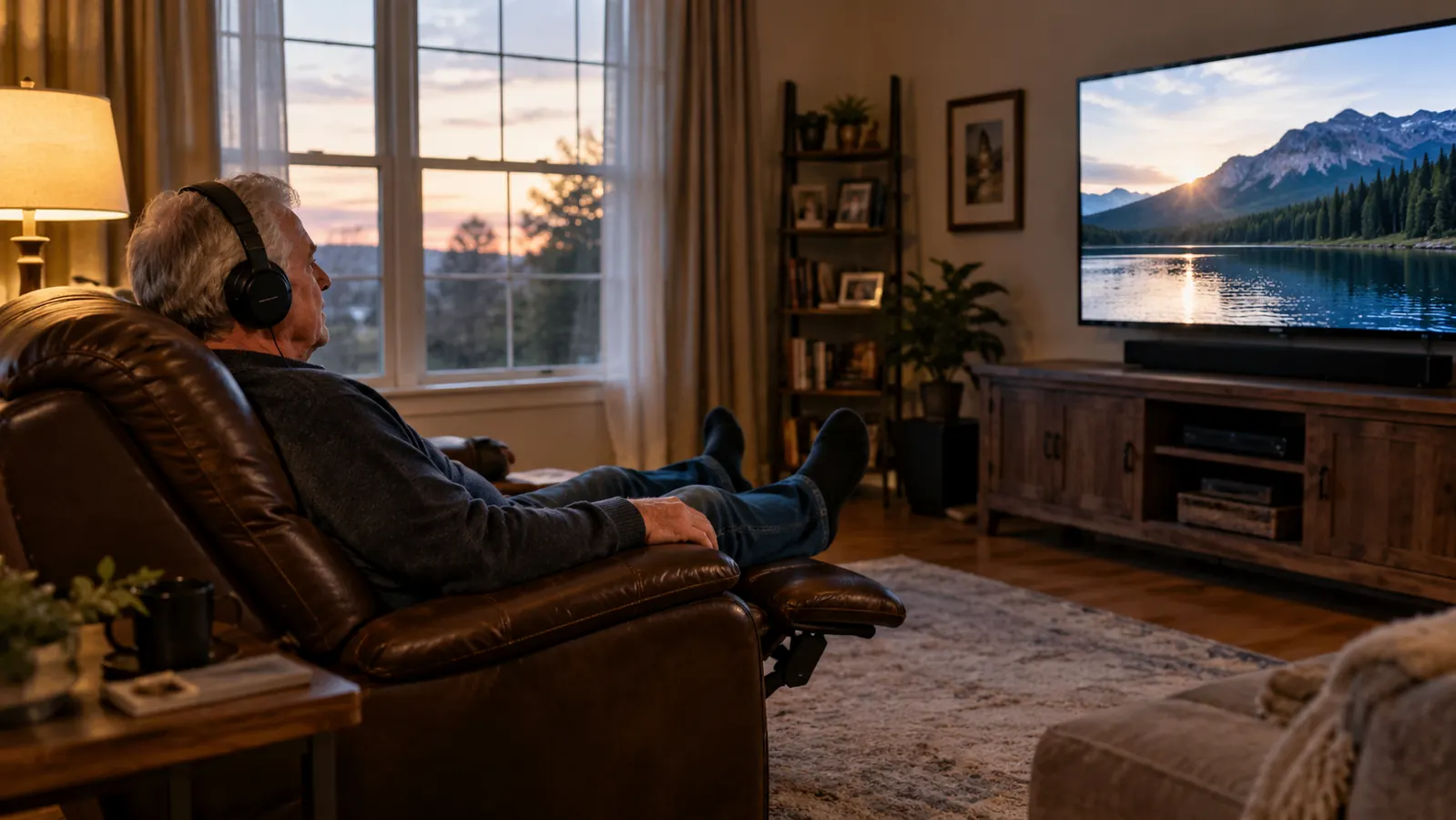
Every evening around seven, the same conversation. Joanne would say, 'Do you really need it that loud?' and I would say, 'I can't hear the dialogue.' Then one of us would get up and adjust the volume, and the other would sit there annoyed. That was our living room for a couple of years before I ordered the TV Ears 11741.
This is not a review written after a weekend with the box. I have used this headset nearly every evening for six months, through the evening news, a full baseball season, and more westerns than I can count. It has not fixed my hearing, and I am not going to pretend it did. What it did was end the volume argument in our house. That alone was worth the price. I will tell you what I like, what I do not like, and whether I would buy it again.
The Quick Verdict
The TV Ears 11741 is the simplest fix I found for the nightly volume argument. It is not a hearing aid and it will not restore your hearing. It just makes the TV loud for you and quiet for everyone else, and it has done that every single evening for six months.
Amazon Check Today's Price →End the volume argument tonight
If your spouse is tired of asking you to turn it down, this is the headset to try first. It plugs into the TV you already own and puts the volume where it belongs: in your ears, not the whole house.
Amazon Check Today's Price on Amazon →How I've Used It
Our setup is plain. The base unit sits on the shelf under the 55-inch TV in our living room, plugged into the audio output. The headset lives on the arm of my recliner, which is about 12 feet from the screen. When I sit down for the news, I put it on, and the TV volume stays where Joanne likes it. That was the whole deal we made: she gets the volume she wants, I get the volume I need.
I watch the evening news most nights, a western when I can find one, and baseball whenever it is on. That works out to roughly two hours a night, sometimes three during the season. The headset has been on my head for most of those hours. I have worn it through a full ballgame without wanting to take it off, which is more than I can say for the first two headsets I tried.
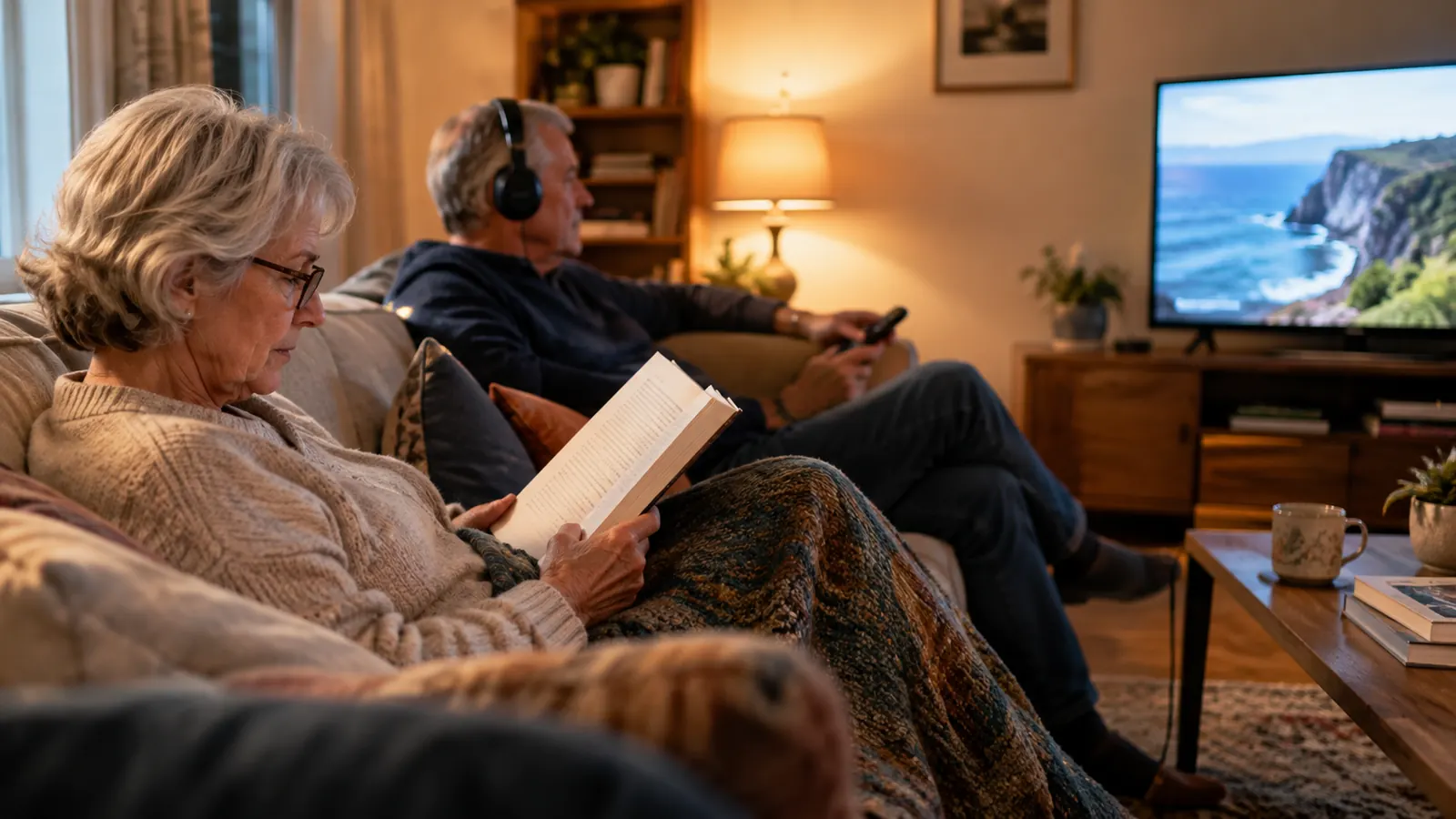
Joanne watches with normal volume. She reads, does the crossword, or just sits with me, and neither of us has to shout over the TV anymore. The first time she noticed the difference was the first evening. She looked over at me and said, 'Oh, that's nice, I can hear myself think.' I have not heard that sentence in this house in years.
What the TV Ears 11741 Actually Does
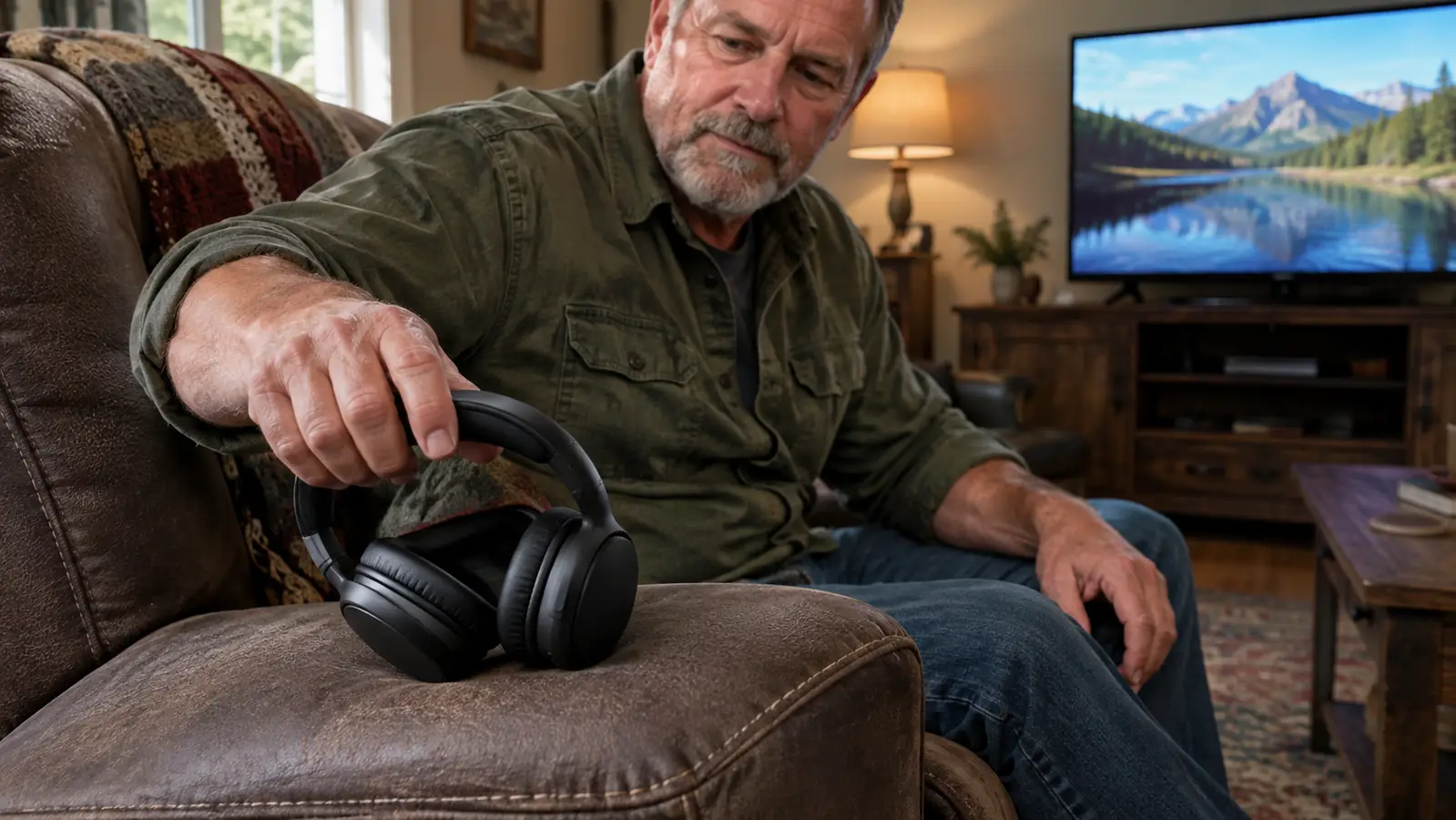
The TV Ears system has two parts. The base unit connects to your TV and sends the sound wirelessly to the headset. The headset has its own volume control on the earpiece, so you set the TV where the rest of the family wants it and turn your own volume up from there. It is not complicated. If you can plug a lamp into a wall, you can set this up.
Here is the part I want to be careful about. This is a listening device, not a hearing aid. It does not correct hearing loss, it does not amplify the whole world, and it will not help you hear conversation across the room. What it does is bring one sound source, the TV, straight to your ears at a volume that works for you. For my kind of loss, which is mostly high-frequency and mostly shows up in dialogue, that is exactly where I needed the help.
The sound quality surprised me. I expected tinny audio, the kind you get from cheap earbuds. What I got is clear dialogue, which is the thing I struggle with most. Music is less of a problem for me, but the headset handles it fine too. I have heard every word of every announcer this season, and I have not once asked Joanne what someone just said. That sentence alone tells you what this product is worth.
What Six Months of Evenings Taught Me
Battery life is the thing people ask about first. The headset uses two AA batteries, and I get about three evenings of use out of a pair, sometimes four. I keep spares in the drawer of the end table, and I have never been caught mid-game with a dead headset. That is a small thing, but it is the difference between a tool you trust and a gadget you fiddle with. The batteries are cheap and easy to find anywhere, which matters more than you would think.
Comfort held up better than I expected. The headset is light enough that I forget it is there for the first hour or so. After two hours I notice it, but I have never had to quit watching early because my ears hurt. I have worn it through extra innings and a few post-game shows without complaint. For a man who spent 34 years wearing a hard hat, that is a comfortable piece of gear.
The range works for our room. I can get up to refill my coffee and keep hearing the TV for a good stretch, and even in the kitchen I can still catch the score. I would not promise it works through the whole house, because it does not, but for one TV room it has been plenty. We have one TV room, and this headset covers it end to end.
The Tradeoffs Nobody Puts on the Box
Let me be straight about the downsides, because there are some. First, this is a one-person system. If both of you have trouble hearing the TV, you need two headsets, and this model comes with one. Joanne has normal hearing, so it has never been an issue for us, but I would not want to buy it expecting to share.
Second, you have to actually wear it. That sounds obvious, but it is the real hurdle. Some evenings I sit down and forget to put it on, and then I reach for the remote and turn the TV up out of habit. The headset only helps if it is on your head. It took me a couple of weeks to build the habit, and I still have to remind myself on nights when I am tired. It is a habit, like reaching for your glasses.
Third, the base unit is one more small box near the TV. Ours sits on the shelf and we barely notice it, but if your setup is already crowded, it is something to know. And some TVs need a specific cable to connect the base unit, so check your TV's outputs before you order. The manual covers it, but it is the kind of detail that is easier to sort out before the box arrives.
Alternatives I Considered
Before I bought this, we tried the obvious things. Turning the TV up worked for me and drove Joanne up the wall. Closed captioning helped with the news but not with baseball, and it drove me up the wall. A soundbar with a dialogue mode helped a little, but it helped the whole room, which was not the problem. The problem was that my ears needed more than the room did.
I also thought about hearing aids. I want to say this plainly: if you are struggling to hear more than just the TV, go get your hearing checked. I did, and I wear hearing aids for conversation and for being out in the world. But they are a bigger step, and they did not solve the TV problem by themselves. The TV Ears headset solved the TV problem. The two tools do different jobs, and I use both.
I tried two other wireless TV headsets before this one. One had a short battery life and died mid-show more than once. The other had a comfortable fit but a weak signal that dropped out whenever I leaned forward. The TV Ears 11741 was the third one I tried, and it is the one that stayed. That is the honest way to describe it: the one that stayed.
Setting It Up in Ten Minutes
The setup took me about ten minutes, and most of that was reading the manual to make sure I had the right cable. The base unit connects to the TV's audio output, you put in the batteries, and the headset finds the signal on its own. There is no pairing button, no phone app, no menu to wander through. It is the kind of product you can set up before your first cup of coffee goes cold.
The only part that gave me pause was the cable. Our TV had the right output, so I was in business right away. If your TV is older, or if you are not sure what the back of it looks like, take a look before you order. The manual lists the options, and the company's customer service answered my one question before I even needed to ask it.
Once it was set up, I did not touch it again. That is the highest compliment I can give any piece of electronics. It has been on the shelf for six months, and I have not had to fiddle with it once. I plug nothing in, I charge nothing, I pair nothing. I put the headset on and watch the game.
What I Liked
- Ends the volume argument: the TV stays at a level everyone else can live with
- Clear dialogue, which is exactly the part of the sound I was missing
- Simple setup with no pairing, no phone app, and no learning curve
- Comfortable enough to wear through a full ballgame
- Good range for one TV room, even a few steps into the kitchen
Where It Falls Short
- One headset per base unit, so it is a solo listening system
- You have to build the habit of wearing it every evening
- Two AA batteries every three or four evenings adds up
- One more small box near the TV, and some TVs need a specific cable
I have not once asked Joanne what the announcer said since the day this headset arrived. That had not been true in years.
Who This Is For
If you have mild to moderate hearing loss, and the TV is where it shows up first, this is for you. If the volume knob has been your only tool, and your spouse has been the one paying for it, this is for you. It is for people like me who do not want a complicated system, who want to plug something in and have it work the same way tomorrow.
It is also for the spouse. Joanne was the one who pushed me to try something, and she is the one who benefits almost as much as I do. She reads in the living room at a normal volume now. If you are the one who has been asking your husband or wife to turn the TV down, this headset is a peace offering that actually works.
It is for the person who watches TV every evening, not once a week. A headset like this earns its keep through daily use, and that is exactly how it gets used in our house. If you sit down in front of the TV most nights, you will get your money's worth in the first month.
Who Should Skip It
If your hearing trouble is not limited to the TV, if you struggle to hear conversation in a quiet room or you find yourself missing doorbells and phone calls, do not buy a headset and call it done. Talk to your doctor and get a hearing test. The TV Ears 11741 is a tool for one job, and it does that job well, but it is not a substitute for addressing hearing loss. I am a user, not an audiologist, and I do not want anyone reading this to skip a real hearing test because a headset made the TV bearable.
Also, if you want to listen together, this is not the model for you. There is only one headset in the box, and two people cannot share it comfortably. And if you rarely watch TV, or you always watch alone at whatever volume you like, you do not have a problem this product solves. Buy it for the problem you actually have, not the one you think you should have.
If the TV is the only place your hearing bothers you, this is the fix
Six months in, I still reach for the TV Ears headset every evening. It is the simplest thing that ended the volume argument in our house, and it still works exactly the way it did on day one. Check the current price on Amazon and see if it fits your living room the way it fit ours.
Amazon Check Today's Price on Amazon →