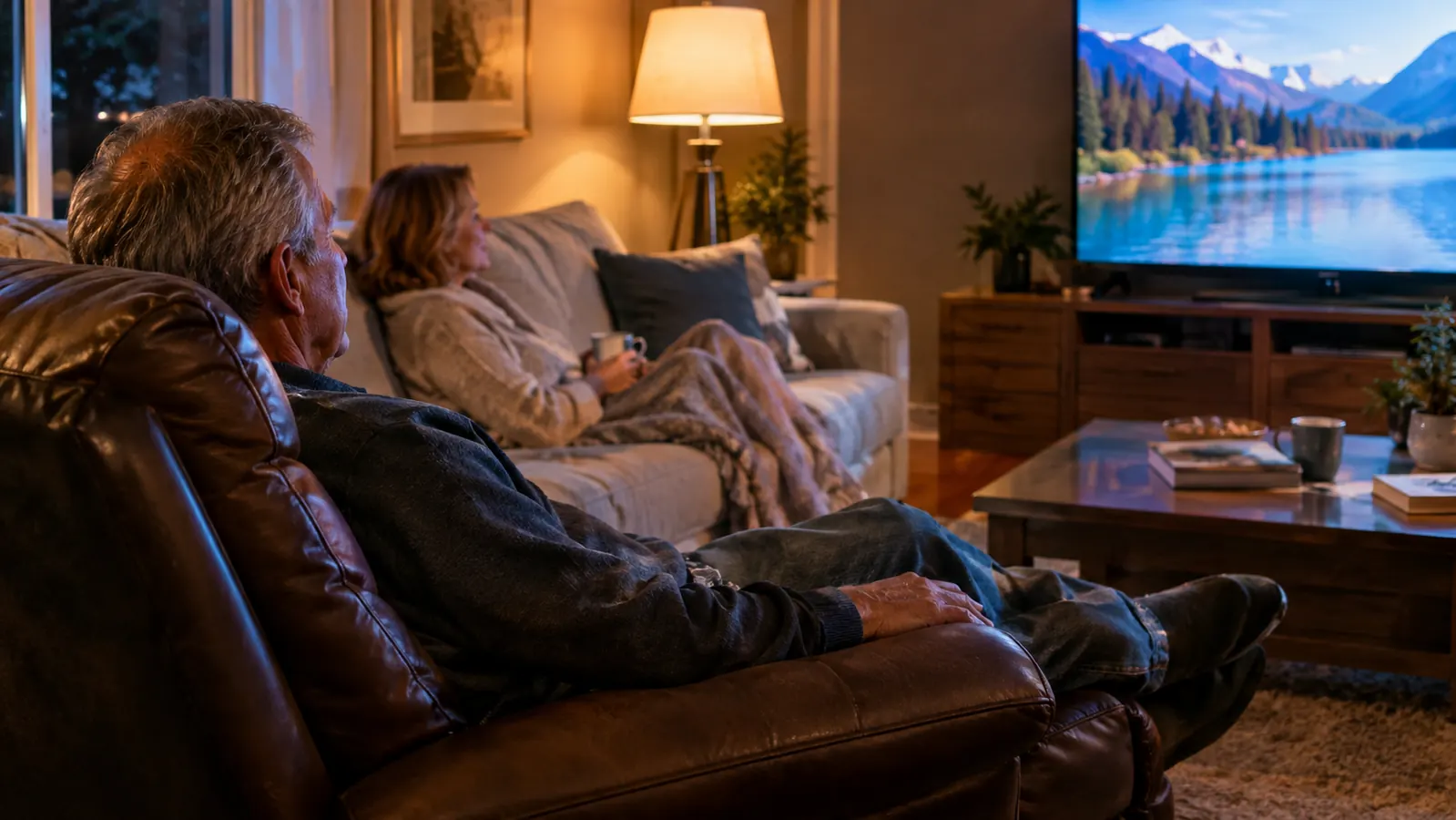
For about two years, Joanne and I watched television at two different volumes. She sat on the couch with the remote in her lap, and every few minutes she would reach over and turn it down. I would wait a bit, then turn it back up. Neither of us said much about it, because we both knew what the other was going to say. The TV Ears headset is what finally broke that loop, and it took me longer than it should have to try one.
I am 69 years old and spent 34 years as an electrical lineman, so the hearing loss in my high ranges did not sneak up on me. It is in both ears, worse on the left, and my audiologist says it is exactly what he would expect from decades around line equipment and chainsaws. What surprised me was not the diagnosis. It was how much it changed the living room.
The part I lose first is dialogue. Music comes through fine, and the evening news is mostly okay when the anchor is looking at the camera. But a western with characters muttering around a campfire, or a ball game with the announcer talking over crowd noise, and I was reaching for the volume. Joanne, who has normal hearing, would reach for it about a minute later.
I tried the obvious fixes first. I sat closer to the screen. I turned on the closed captions. I even tried one of those amplified TV speakers, which just made everything louder without making it clearer. None of it fixed the actual problem, because the problem was not the TV. The problem was my ears.
A friend from the union hall mentioned TV Ears one evening and said he had been using the Model 11741 for about a year. I read up on it, ordered it, and set it up on a Tuesday night. That same night, Joanne and I watched a full ball game at a volume she could live with, and I heard the announcer say the score the first time. That is not a small thing.
That first night we watched a full ball game at a volume Joanne could live with, and I heard the announcer call the score the first time.
Hear the TV again without turning the house up.
The TV Ears Model 11741 sends the TV's audio straight to your ears, so you get the volume you need and your spouse keeps the volume they want. It is the fix that ended the volume war in our living room. Check today's price on Amazon.
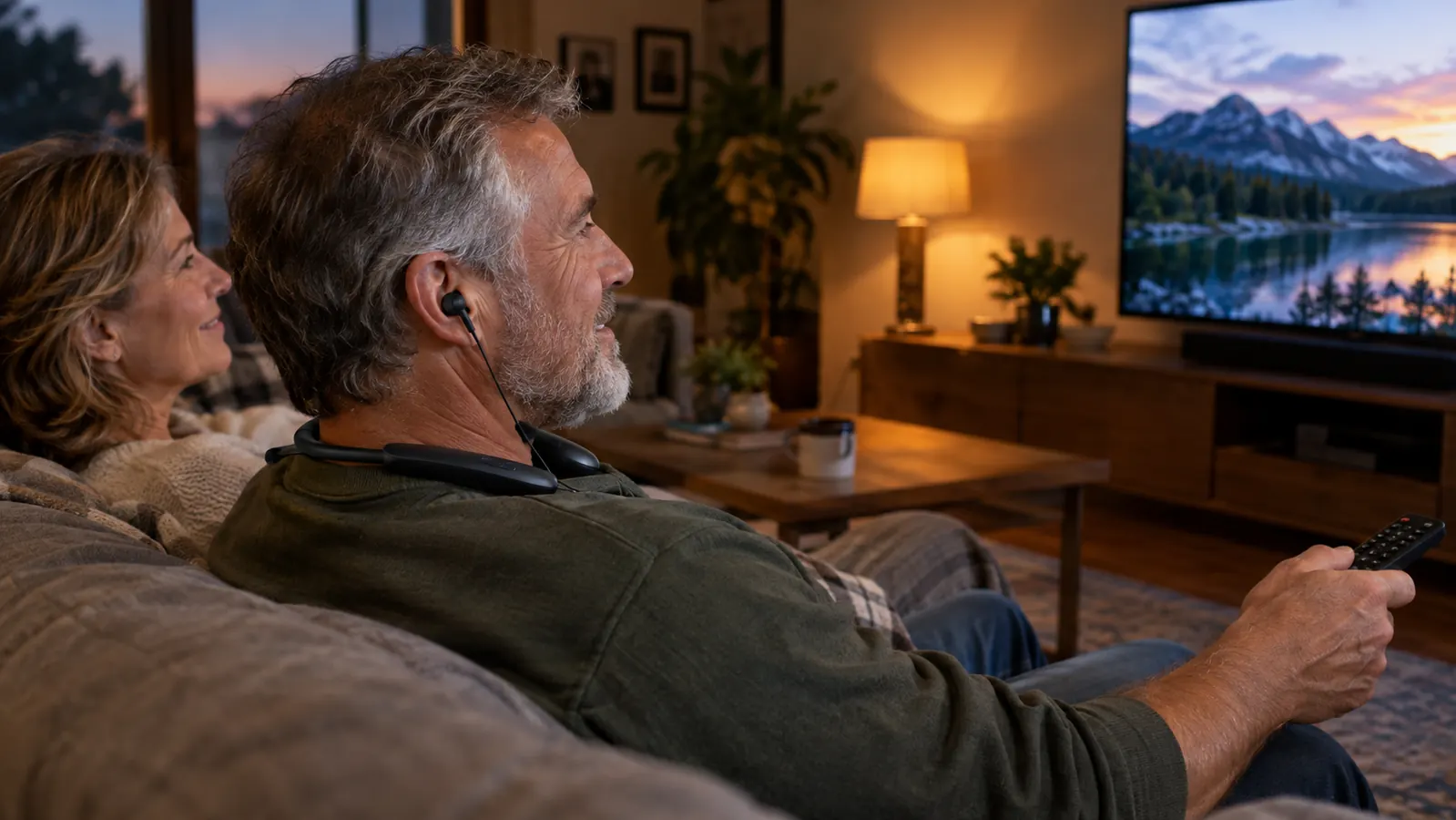
Amazon Check Today's Price on Amazon →The TV Ears system is simpler than it looks. A base plugs into the TV, usually through the audio out jacks, and sends the sound wirelessly to a lightweight headset. You adjust the volume on the headset itself, so Joanne can keep the TV at her level and I can run mine a few notches higher. It is not a hearing aid, and I want to be clear about that. I am a user, not an audiologist. For my kind of loss, it simply puts the dialogue closer to my ears than the speakers twelve feet away ever could.
The headset is comfortable enough for a full ball game, which surprised me, because I have never liked things on my head. The battery lasts longer than I expected, and the base charges the headset when you set it down. There is a short delay when you first turn it on while it finds the signal, maybe two seconds, and then it is just the TV, but clearer.
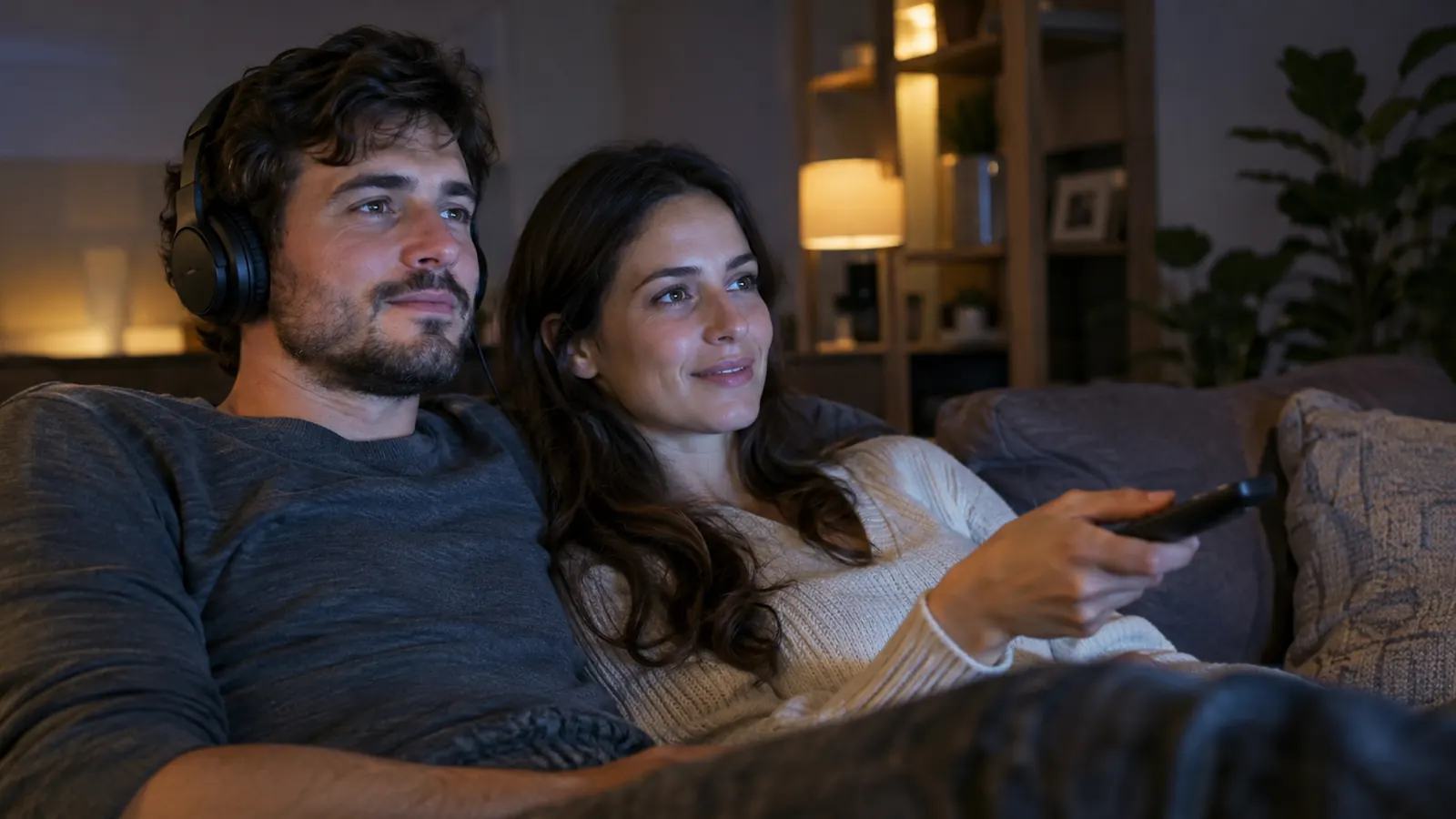
I will also tell you what it does not do. It does not make a poorly recorded show sound good. It does not help much in a crowded room, because it is built for one TV and one listener. And if your hearing loss is more than mild to moderate, or if you have not seen a professional about it, a headset is not the answer by itself. I say that because it is true, and because I would rather you know it before you order than after.
The real change is slower and harder to put in a review. Joanne stopped asking me to turn it down. I stopped bracing for it. We sit in the same room, watch the same shows, and when the news ends she talks over the credits the way she used to. That sounds like a small thing. After two years of the volume war, it does not feel small.
Setup took me about ten minutes, and most of that was finding the right jacks on the back of the TV. The instructions are plain. If you can plug in a lamp, you can set this up. Joanne watched me do it and said nothing, which for her is a kind of approval.
What I'd Tell You If We Were Sitting at My Kitchen Table
If you are the one turning the TV up, or the one married to the person turning it up, here is what I would say. Get your hearing checked first, especially if it has been a few years. It is painless, and it tells you what you are actually working with. Then try one of these headsets, because the cost of finding out is a return if it does not fit your room. And when you set it up, do not test it alone. Test it the way we did, with both of you in the room and the remote within reach. The headset is not the point. The evening is the point.
I waited two years too long because I thought a TV headset would be a medical-looking gadget that made me feel older. It is just a tool, the same as the remote. I use both now, and the living room works.
Your living room is the test.
If the volume war sounds familiar, the TV Ears Model 11741 is the fix we landed on. It is the headset that gave our evenings back. Check today's price on Amazon and see if it fits your setup.
Amazon Check Today's Price on Amazon →